
Overview of CPCB EPR Plastic Registration
Any company that brings plastic packaging to the consumer market is subject
to extended producer responsibility. The
organization must use EPR to treat plastic packaging responsibly to the end
of its useful life. Producers, importers,
brand owners PIBO, and plastic waste processors are granted EPR
Authorizations by the Central Pollution Control Board
CPCB for recycling and other uses (such as waste to energy, waste to oil,
and industrial composting), as detailed in the
Plastic Waste Amendment Rules 2022 by the Ministry of Environment, Forestry,
and Climate Change MoEF&CC.
All organizations producing pre- and post-consumer plastic packaging waste
must comply with EPR Authorization in order
to promote the reuse, recycling, and end-of-life disposal of recycled
plastic. Registering with the CPCB and SPCB is
crucial. A CPCB registration is required for PIBOs that operate in more than
two states or UTs. Before production can
begin, an EPR Registration is needed for plastic waste management. As per
the latest regulations specified in the
Plastic Waste Management Rules, 2022, it is mandatory for a PIBO to fulfill
all criteria and submit Form I along with an
Action Plan that satisfies the standards of the Environmental Protection
Act, 1986.
Meaning of EPR Certificate for Plastic Waste
In order to handle plastic waste and keep it under control, Indian makers and importers of goods are required by law to comply with Extended Producers Responsibility or EPR. To conduct business in India, manufacturers and importers need to get an EPR certificate from the Central Pollution Control Board or CPCB, a division of the MoEFCC, the Indian government.
Concept of EPR for Plastic Waste
A concept known as Plastic Extended Producer Responsibility or EPR mandates that makers and manufacturers of plastic items be accountable for the management of their products after the end of their useful lives. Under the Plastic Waste Management Rules, 2016, it is enforced by the CPCB and is applicable to any businesses that manufacture, import, or market plastic items in India. The EPR program aims to promote sustainable waste management techniques and lessen the negative effects of plastic waste on the environment. In order to participate in the EPR system, enterprises must register with the CPCB, execute a plastic waste management strategy, and pay a charge for any services the CPCB provides. There may be fines and punishments for breaking the regulations.
Types of Certifications under EPR
There are four types of EPR Certifications mentioned below:
- 1. EPR Authorization for the Management of Plastic Waste: In order to encourage environmentally friendly practices in the plastics sector and lessen the quantity of plastic waste that contaminates the environment, the government enforces the EPR regime under the plastic waste management regulations. It has set basic guidelines for the plastics industry, such as proper processing through recycling and end-of-life disposals for repurposing, such as roadmaking, co-processing, Waste-to-Energy, Plastic-to-Oil, and industrial composting. It has also taken on responsibility for the entirety of the lifespan of its goods in order to assist manufacturers in making their operations more sustainable, reduce waste, and promote a circular economy. As a result, sustainable business practices are advanced.
- 2. EPR Authorization for the Management of E-Waste: EPR regulations mandate that producers, importers, manufacturers, and retailers of electronic goods must sell their products in a way that minimizes negative impacts on the environment and public health. EPR goals can be achieved by product collection, reuse, recycling, or disposal at the end of their useful life.
- 3. EPR Authorization for the Management of Waste Tyre: Extended producer responsibility (EPR) obligations are now imposed on all producers, waste tyre recyclers, and re-dealers by the Indian Ministry of Environment, Forestry, and Climate Change (MoEFCC) Amendment Rules. These responsibilities include setting up mechanisms for paying environmental compensation in the event of non-compliance, reaching EPR objectives, and registering. Various standards have been established by the Central Pollution Control Board (CPCB) to ensure that regulations are implemented efficiently.
- 4. EPR Authorization for the Management of Battery Waste: Holding manufacturers to take accountability for the product's end-of-life handling is an essential part of E-waste Management, an essential step in guaranteeing that batteries are handled in India in an environmentally friendly manner. All battery types, including lead-acid, nickel-cadmium, and lithium-ion batteries, must comply with these requirements, and the manufacturers must ensure that a certain amount of used batteries are collected and recycled each year.
Importance of CPCB EPR Plastic Certificate
The Plastic Waste Management Amendment Rules, 2022 established new standards for the PIBOs in order to limit the use of single-use plastic and encourage the development of a circular economy. Getting an EPR registration was one of them in order to manage plastic waste efficiently. Furthermore, a few additional noteworthy modifications included in the revised regulations include:
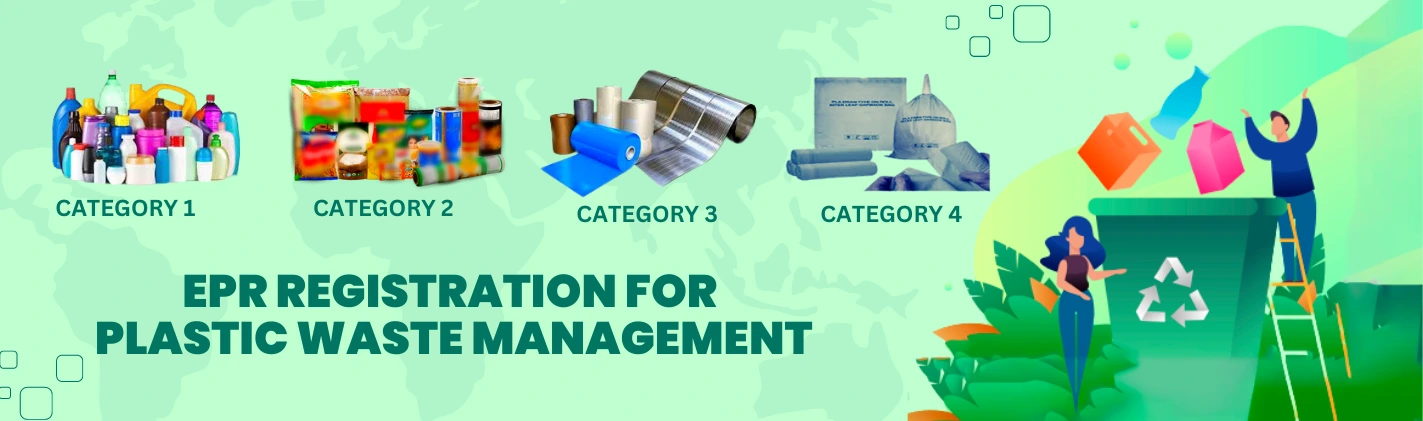
- Four new types of plastic packaging types 1, 2, 3, and 4 have been introduced and are subject to Extended Producer Responsibility. Key elements of extended producer responsibility (EPR) have been determined to be recycling, reuse, end-of-life disposal, and usage of recycled plastic material. For PIBOs, specific goals have been added to each of the plastic packaging types.
- PIBOs will no longer be released from their EPR objectives by just making up for the target's unfulfilled state. If the goals are not met, they will be carried over to the next year for a maximum of three years.
- In accordance with its EPR action plan, the SPCB in the state will develop a list of PIBO-specific actions and make them available to the public. Information from the State Nodal Agency and PIBO will be verified by SPCB/PCC and sent to the CPCB.
- It is now possible to sell extra EPR certificates from other PIBOs. If a PIBO or plastic waste processor is unable to meet their targets, then they may buy certificates of comparable quantity from other PIBOs who have recycled more than their required amount.
Let us now understand the benefits of EPR Certificate for Plastic Waste Management:
- 1. Efficient Handling of Waste:EPR helps lessen the negative effects of plastic pollution on the environment by holding manufacturers responsible for the appropriate disposal and recycling of plastic waste. It encourages plastic waste to be collected and recycled effectively, keeping it out of landfills and waterways.
- 2. Brand Recognition and Reputation: A key component of the Swachh Bharat Mission is recycling. In the broader market, recyclers and scrap merchants gain recognition. Putting EPR standards into effect improves your brand's standing as an environmentally conscious company. Sustainable business practices are becoming more and more valued by customers. You may win their confidence and loyalty by adhering to EPR requirements.
- 3. Safety of the Environment: EPR eliminates pollution and aids in the preservation of natural resources. Consequently, this promotes sustainable development, which is beneficial to both producers and customers.
- 4. Avoiding legal repercussions: By guaranteeing adherence to the Plastic Waste Management Rules, EPR registration shows your dedication to environmental responsibility. It assists companies in avoiding fines and legal repercussions for noncompliance.
- 5. Financial Possibilities: The recycling industry has more financial potential because of EPR registration. For people and organizations involved in waste management, this industry offers employment and commercial opportunities due to the growing need for plastic waste processors.